- Blog
- How to Import a Car to Estonia
How to Import a Car to Estonia
Importing a car to Estonia can be easy if you know the right steps. Here, you’ll find the key documents, taxes, registration process, and market trends for car traders.
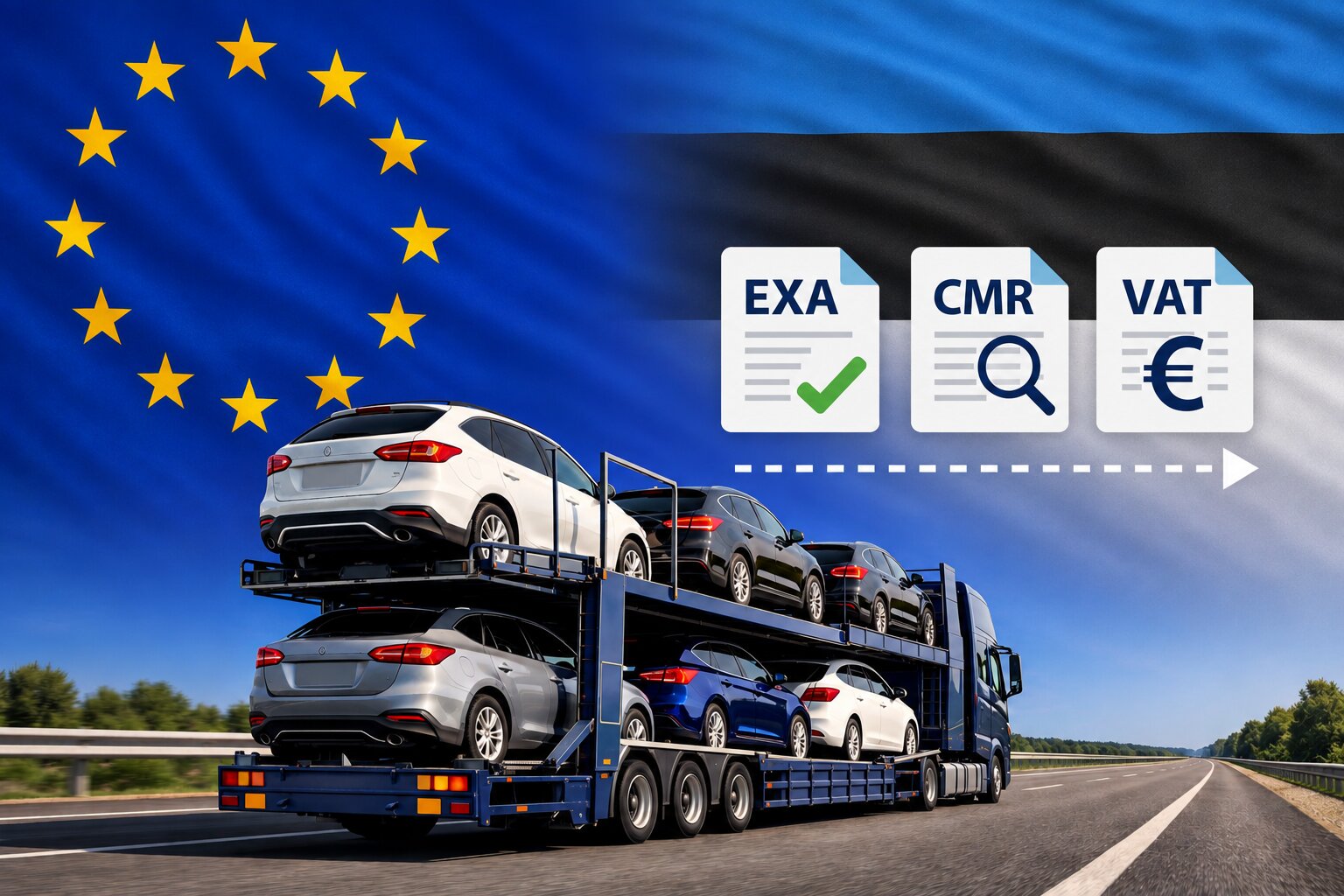
If you’re interested in buying used cars abroad and reselling them in Estonia, you’ll be glad to know that the process is fairly straightforward when importing from another EU country.
Since Estonia is an EU member state, you can move cars easily, without the usual customs procedures that apply to imports from outside the EU.
To help you import used cars successfully, we’ll show you the key documents, taxes, and steps you’ll need to complete during the import process.
Documentation for importing a vehicle to Estonia as a business
Here’s a list of the documents you’ll need during import.
Vehicle purchase invoice
The invoice is one of the most important documents because it proves you’ve legally acquired the vehicle.
It also shows the VAT treatment of the car purchase.
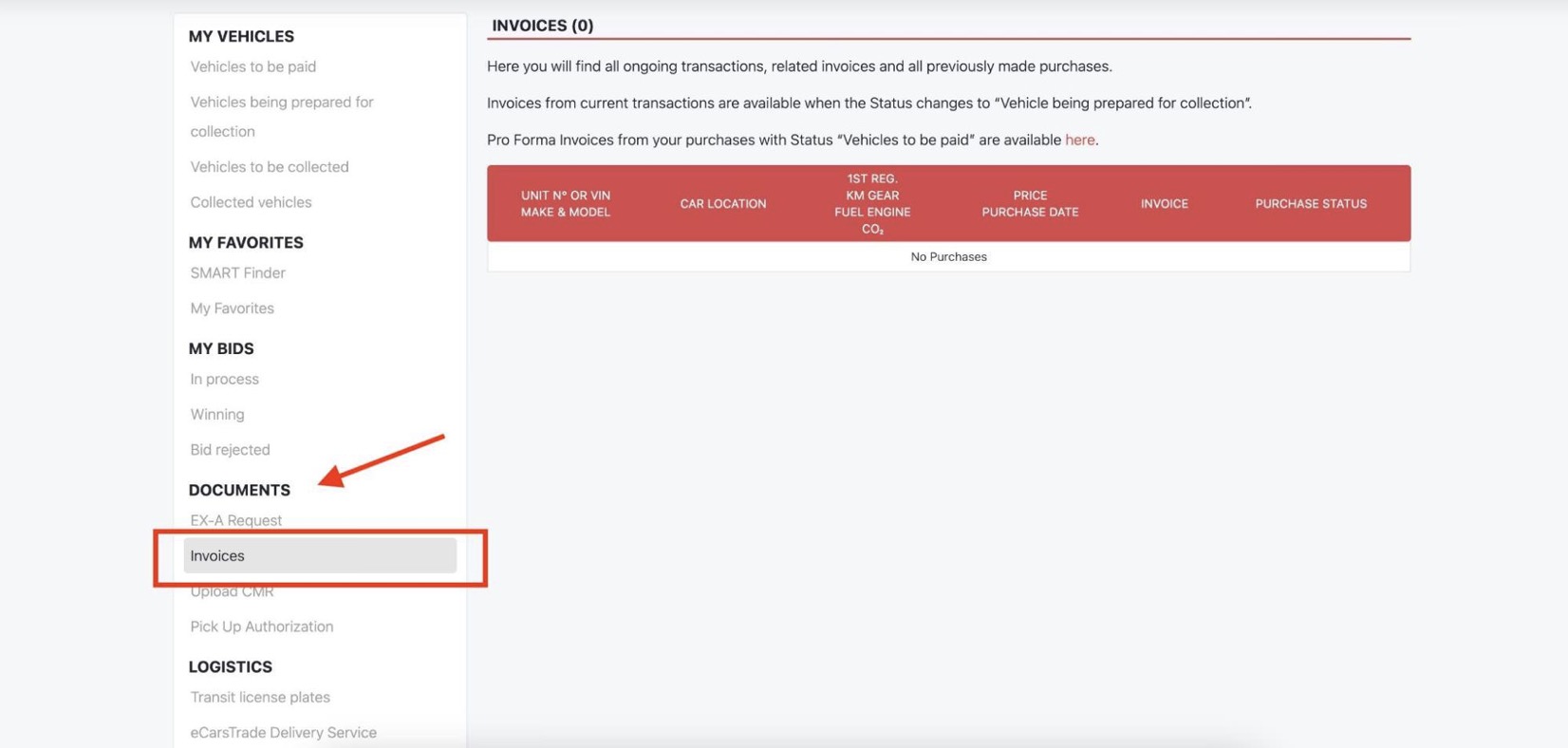
When you buy through eCarsTrade, you can access the invoice on your Personal page after you’ve completed the transaction.
Original registration papers
For a used vehicle, you need a valid registration certificate from the country of origin.
If the certificate has two parts, you’ll need to submit both.
Cars listed on eCarsTrade come with their original registration documents, so this piece of documentation is already taken care of.
Proof of identity and company registration
The Estonian Transport Administration requires an identification document during the pre-registration inspection.
For registration itself, you can register the car in the name of a legal person registered in the Estonian Business Register.
So, if you’re buying a car as a registered car dealer, you’ll have to prepare your company details, VAT number, and representative documents.
Taxes when importing a car to Estonia
To make sure your imports are profitable, you should first estimate the total cost of import.
Taxes play a big role in that, so we’ll see the main taxes and fees to keep in mind.
► VAT
When you’re buying used cars within the EU, VAT depends on the VAT scheme used.
There are two VAT mechanisms: the standard VAT scheme and the margin scheme.
In the standard VAT scheme, the car is sold with deductible VAT.
This means the price is usually shown without VAT, and VAT is handled separately in the buyer’s country.
You’ll find these cars marked as VAT-deductible on eCarsTrade.
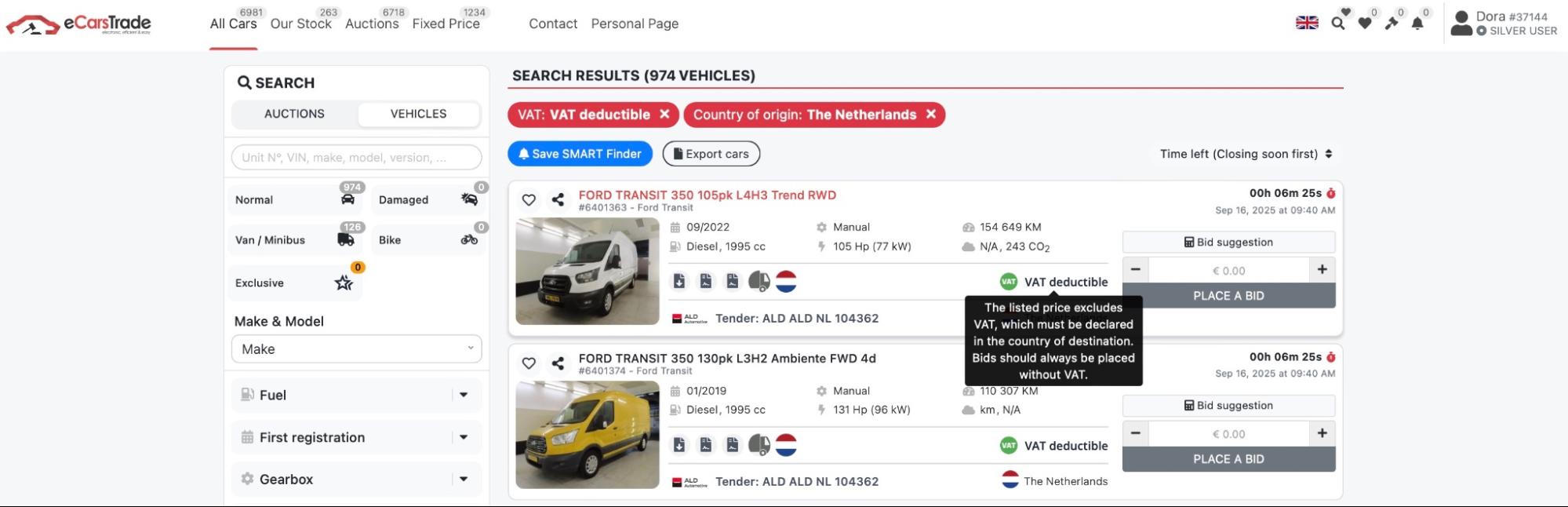
If you’re importing the car to Estonia as a VAT-registered business, you usually buy the vehicle without paying VAT to the seller, then declare and account for VAT in Estonia at the standard VAT rate of 24%.
The second option is the margin scheme.
In this case, VAT is already included in the price, but it isn’t shown separately on the invoice.
Because of that, you can’t deduct it or reclaim it later. On eCarsTrade, these cars are usually marked as Margin - VAT not deductible.
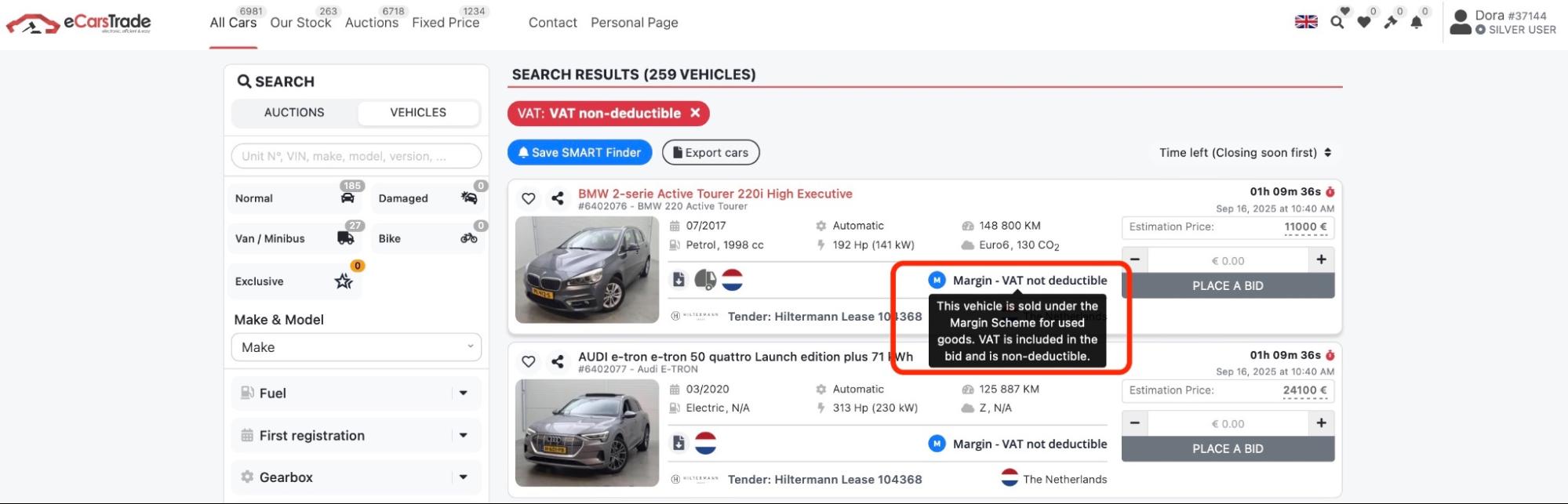
So, always check the VAT scheme before buying, as it affects your total cost and VAT reporting.
► Customs duty
If you import a vehicle from another EU member, you don’t pay customs duty.
For cars imported from outside the EU, customs duty is usually 10% of the vehicle’s customs value.
To confirm the exact rate, check the EU TARIC database before importing.
► Estonia’s Motor Vehicle Tax
Estonia has a relatively new Motor Vehicle Tax, which was introduced in January 2025.
The system consists of two parts: the annual motor vehicle tax and the registration fee.
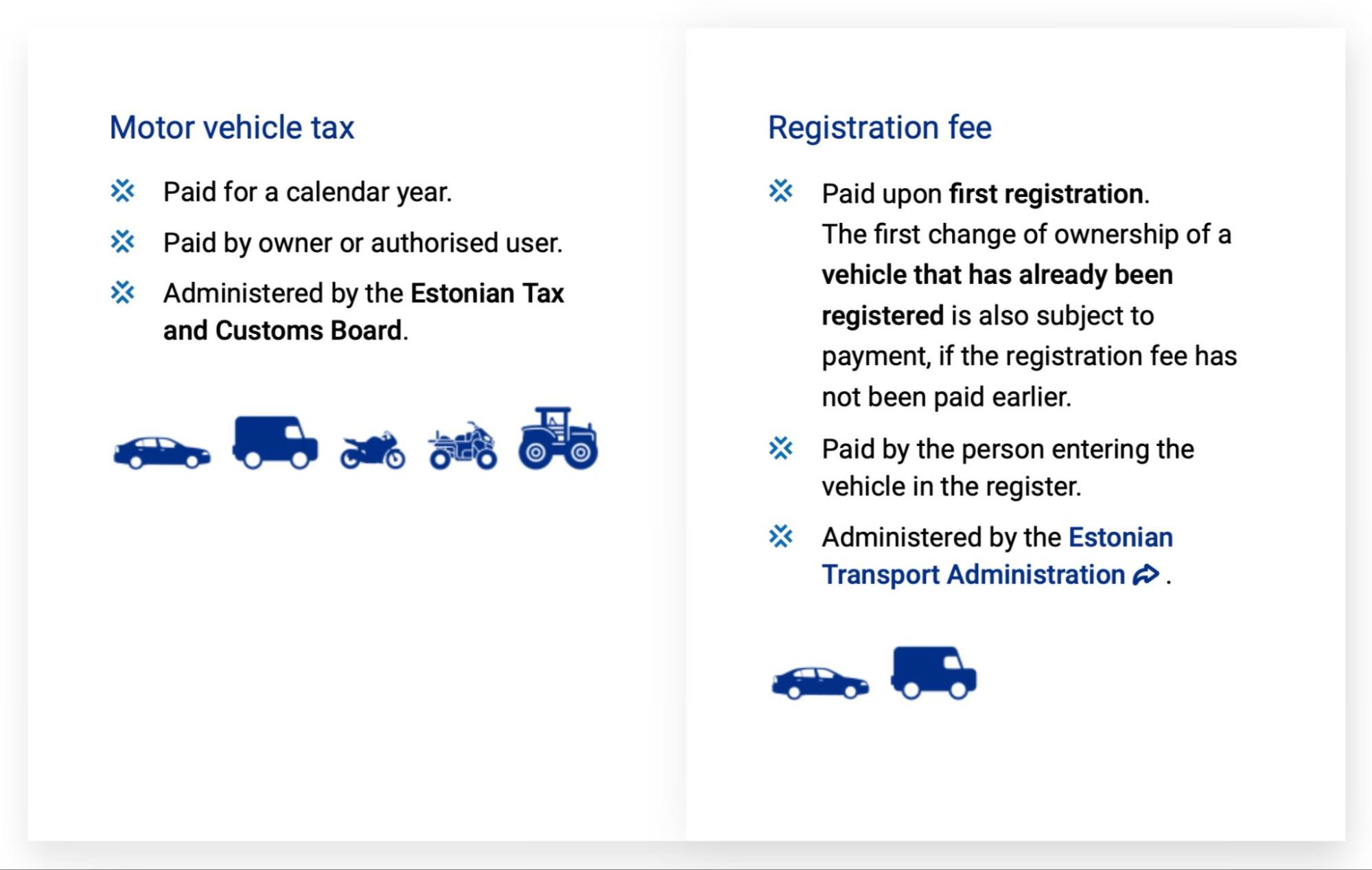 Source: Estonian Tax and Customs Board
Whether you pay these costs as a trader depends on when you register the car.
If you import the car and register it in Estonia before selling it, you’ll have to pay the registration fee.
If the customer registers the car after buying it from you, they’ll usually pay the registration fee instead.
The annual motor vehicle tax works similarly: it depends on who is listed in the Estonian motor register.
If the car is registered to your company, you pay the annual tax while it’s registered to you.
Once the customer becomes the registered owner or authorized user, they become responsible for the annual tax.
Step-by-step process - from purchasing a car to importing it to Estonia
Let’s see what steps you’ll need to take, from buying a vehicle to getting it ready for registration.
1. Research and buy the car
Your first step should be to research your local market and identify the right used vehicles you can sell fast.
If you’d like to browse a wide selection of used cars from Europe, eCarsTrade can help you find vehicles that match your needs.
You can use filters on the platform to narrow down your search by price, fuel type, year of first registration, and other relevant criteria.
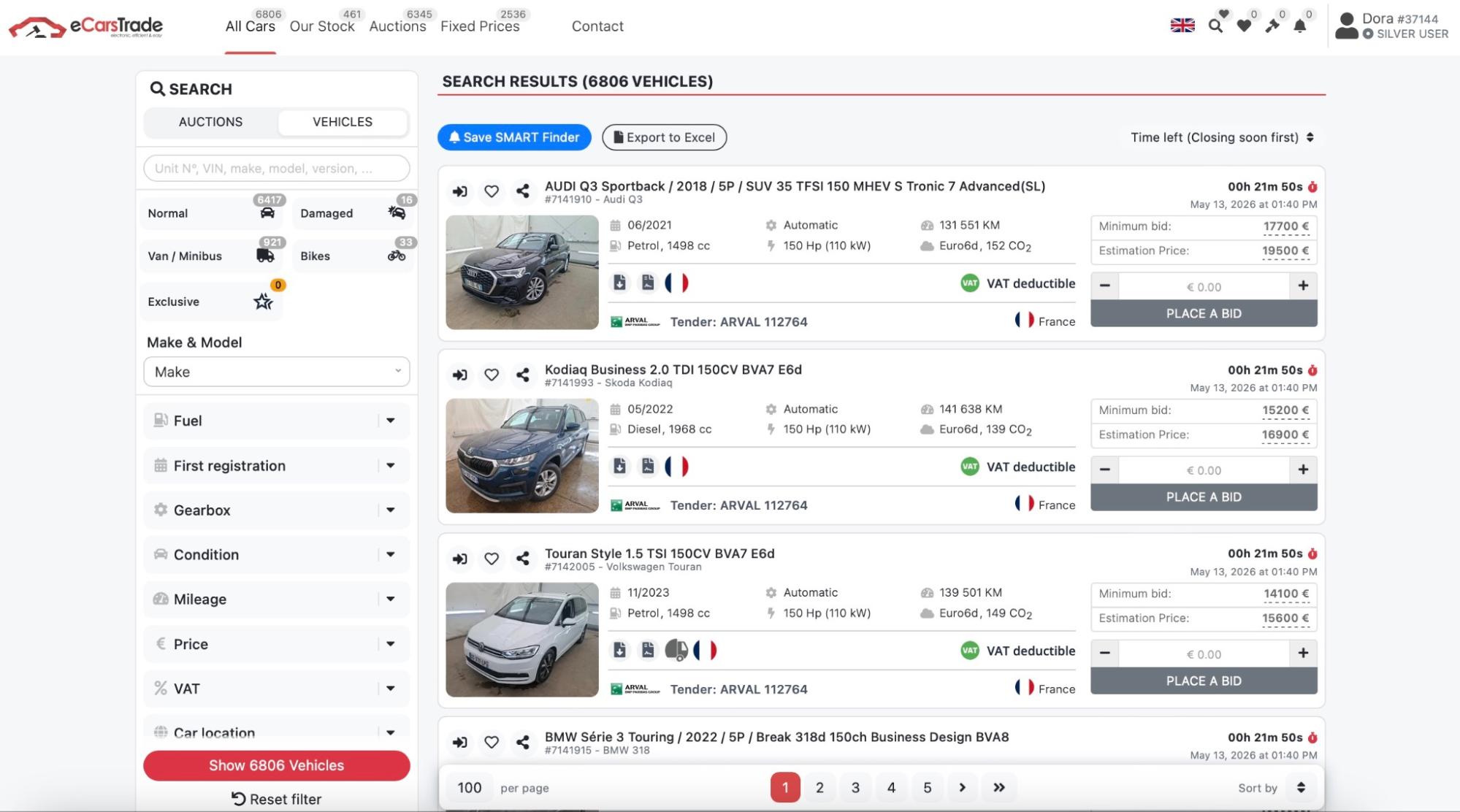
Each listing comes with a detailed overview of the car’s condition, helping you assess precisely what you’re buying.
After you’ve placed your bid, won an auction, and made the payment, you’ll receive your vehicle purchase invoice. Then, you can start the import process.
2. Arrange transportation to Estonia
You’ve bought the car, and now it’s time to transport it to your dealership.
Buying through eCarsTrade makes this step easy because you can use the eCarsTrade Delivery Service.
eCarsTrade works with trusted truck transport companies and can organize delivery to your dealership.
That way, both the vehicle and its documents are handled for you.
You could also transport the car by yourself.
If you choose this option, remember to plan for transit plates and insurance so you can legally drive through countries.
3. Submit the car for pre-registration inspection
Every vehicle has to pass a pre-registration roadworthiness test before it can be registered in Estonia.
Bring the vehicle to an Estonian Transport Administration service bureau, where they’ll identify the vehicle and check whether it meets the required technical requirements.
Here’s a list of documents needed for used vehicles at this step:
- Original registration documents from the country of origin
- ID document of the owner or their representative
- Vehicle purchase invoice
- An authorization letter if someone other than the owner is submitting the vehicle
If the vehicle’s technical data hasn’t been recorded in Estonia before, the Transport Administration may need to verify and enter additional information.
This can take up to 30 days, while the regular procedure can take up to 10 days.
4. Pay the registration fee and applicable taxes
Before you register a passenger car or van in the Estonian motor register for the first time, you’ll need to pay the registration fee.
After registration, you’ll also have to pay the annual motor vehicle tax.
This tax is handled by the Estonian Tax and Customs Board.
Since the final amount depends on the vehicle, it’s a good idea to calculate it before buying.
This is especially useful if you’re importing a heavier vehicle or a vehicle with higher CO₂ emissions.
You can use the Estonian Tax and Customs Board’s motor vehicle tax calculator to estimate the cost in advance.
5. Register the car
Once the vehicle is ready for use in Estonia, you have to register it within 5 working days.
You can do this after the vehicle has passed the pre-registration inspection.
You’ll have to submit an application to register the vehicle, which you can do online.
For some vehicles, you can skip visiting a service bureau in person and register the car online using an ID card reader and uploading photos.
This applies to M1, M1G, N1, and N1G vehicles with European type approval, as long as the vehicle is already in Estonia.
Get to know the Estonian used car market
Estonia has one of the oldest car fleets in the EU, making it a promising market for used-car businesses.
However, supply and demand weren’t always as consistent as they are now.
The car market in Estonia changed after the introduction of the new vehicle tax.
There was a sharp decrease in sales at first, but recent figures show that buyers are coming back.
ERR reported that Estonia’s car market has started to stabilize, and lightly used vehicles have become more popular.
More precisely, the used car market saw a strong increase in March 2026, with transactions up 48% compared to March 2025.
Autoportaal also reported that 1,397 used passenger cars were imported into Estonia that month, mostly from Germany, Finland, and Sweden.
Interestingly, the average age of recently imported used cars was 8 years, which shows that buyers are looking for newer used vehicles, not just the cheapest options.
When it comes to models worth stocking, Autoportaal shares two relevant categories.
The most popular used car models in Estonia in March 2026 were:
- BMW Series 3
- Volkswagen Passat
- Skoda Octavia
Among cars up to 10 years old, the most popular models were:
- Skoda Octavia
- Toyota RAV4
- Toyota Corolla
And if you’re not sure what fuel type to import, it’s worth knowing that diesel was still the leading fuel type among imported used cars, followed by petrol.
Overall, Estonia can be a good market if you focus on practical models and vehicles that match what local buyers are already choosing.
Importing a car to Estonia - FAQ
► Does every imported car need an inspection before registration?
Yes. Before registration, the vehicle must pass a pre-registration roadworthiness test, where the authorities check the vehicle’s identity, documents, type approval, and technical compliance.
► How much time do I have for registering a car in Estonia?
You need to register the vehicle within 5 working days of starting to use it in Estonia. For car traders, this means five days after the car is imported into Estonia.
► What does Estonia’s Motor Vehicle Tax consist of?
Since January 2025, Estonia’s Motor vehicle tax includes two parts: the annual fee (paid to the Estonian Tax and Customs Board) and the registration fee (paid to the Estonian Transport Administration).
► What import-related taxes will I have to pay?
You’ll pay VAT, the registration fee, and the annual motor vehicle tax.
Customs duty doesn’t apply to purchases from other EU countries. You only pay it if you’re importing a car from outside the EU.
► Can I register a car digitally?
Yes, you can in some cases. If the car is eligible, has European type approval, and is already in Estonia, you may be able to register it online using photos of the vehicle. You’ll need an ID-card reader for this.
O nosso vasto inventário inclui várias marcas e modelos para satisfazer todas as suas necessidades, provenientes diretamente de reputadas empresas europeias de leasing, empresas de aluguer de curta duração e concessionários: