- Blog
- How to Import a Car to Tunisia
How to Import a Used Car to Tunisia
Find out what you need to import used cars to Tunisia, including taxes, documents, and every step from purchase to registration.

Considering how Tunisia’s car market has been growing in recent years, importing used cars from Europe can be a good opportunity for your dealership.
While it’s true that import costs and taxes can be relatively high, well-maintained European cars usually keep strong resale value in Tunisia, so you can still achieve good profits by managing your import costs carefully.
We’ll now guide you through the full import process so you know exactly what to prepare before buying and shipping a car.
Import regulations of Tunisia
If you decide to import used cars into Tunisia, remember that imported vehicles must be less than five years old at the time of import.
There are also restrictions for private individuals, who are generally limited to importing only one car every three years, which is why most traders import through a registered business.
Now that you’re aware of these regulations, you’re ready to start importing. Let’s see what documents you’ll need for that.
Documentation for importing a vehicle to Tunisia as a business
Here’s a list of documents you’ll need for import.
► Vehicle purchase invoice
The first document to obtain is the vehicle purchase invoice, which shows the car’s sale details.
It contains information such as the car's make and model, VIN, year (or first registration), sale price and currency, and buyer and seller details.
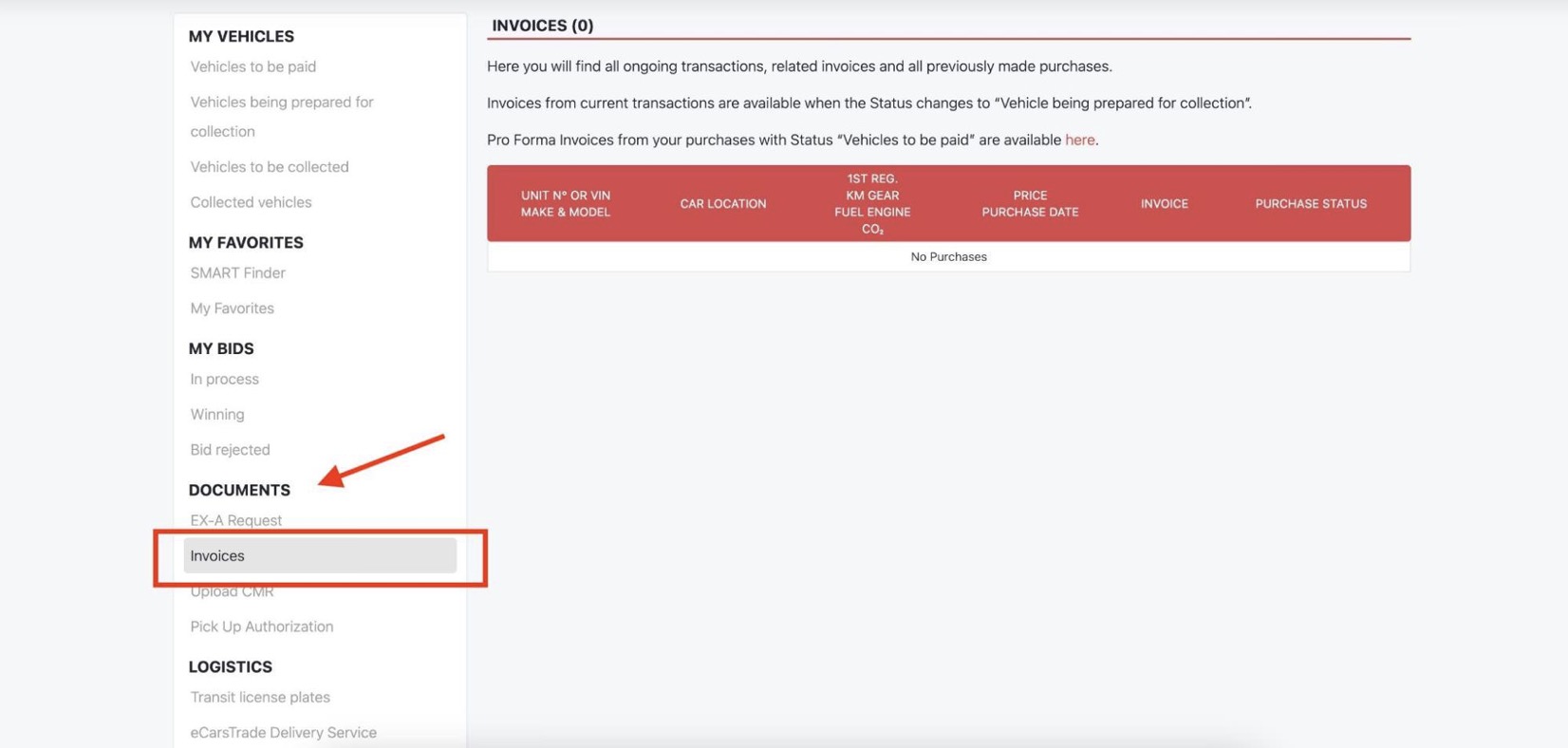
If you’ve bought the car through eCarsTrade, you can get your invoice on your Personal Page.
► Original registration papers
Original registration papers confirm that the vehicle was legally registered in its country of origin.
You’ll need them so that Tunisian customs can verify ownership and vehicle history.
► Valid passport copy
A valid passport copy serves as proof of identity for the importer.
Tunisian customs require it to confirm who is responsible for the import and to match the importer’s name with the car documents.
► COC
You may also need a Certificate of Conformity (COC), the document that shows that a car complies with the technical, safety, and emissions standards of its original registration market.
Note that many used cars are sold without the COC. If that’s the case with the car you’re planning to import, you can order a COC certificate from providers like EUROCOC or COC Europe.
► EX-A export declaration
The EX-A export declaration is an official EU customs document that shows that a vehicle has been exported outside the European Union.
It must be issued before the car leaves Europe, and you’ll need it both for Tunisian customs and to get your VAT refund.
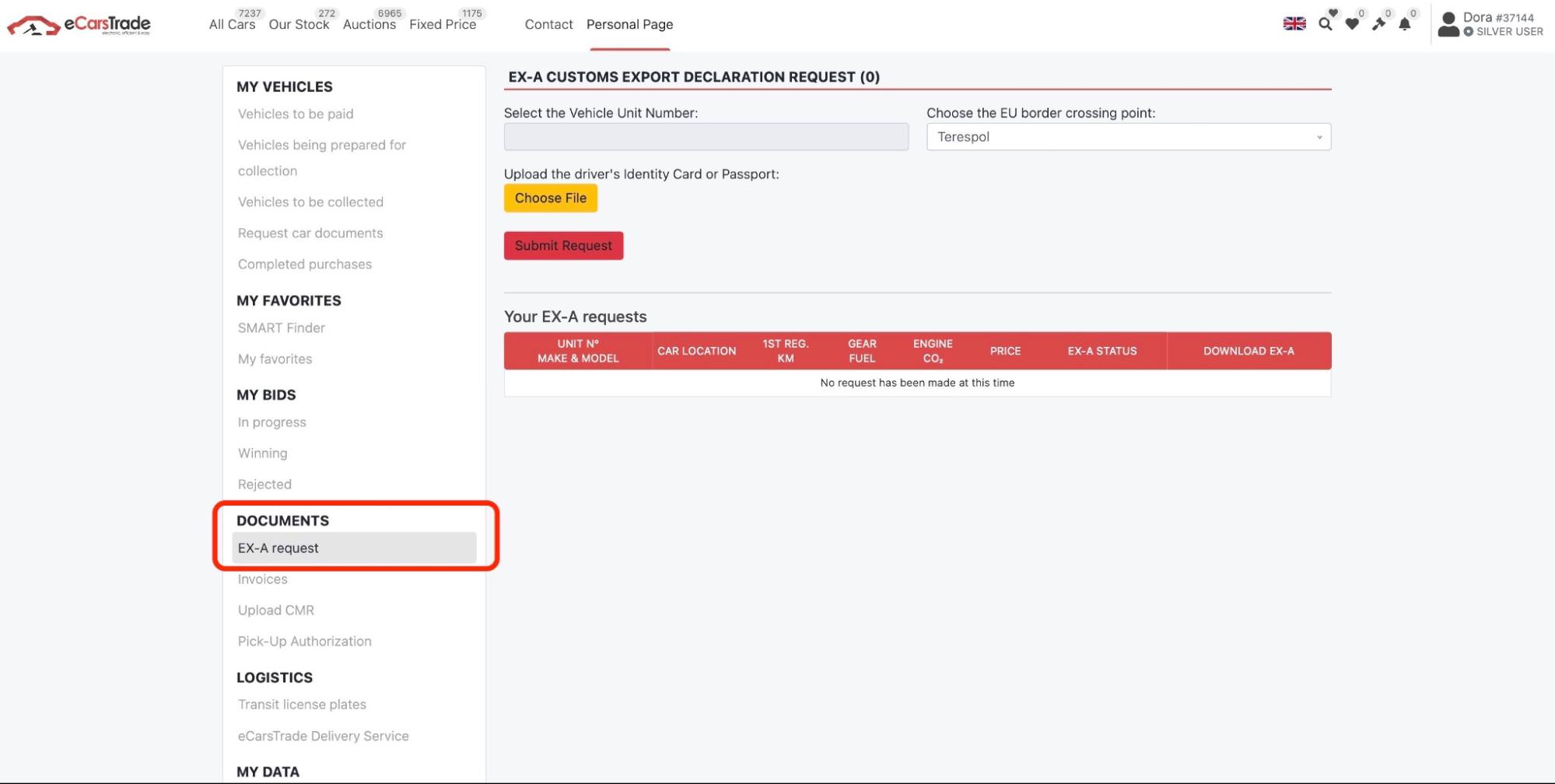
Since the seller files the EX-A declaration, eCarsTrade will prepare it for you.
You’ll only need to tell us which port you’ve arranged the car to leave from.
Taxes when importing a car to Tunisia
Tunisia is known for charging some of the highest import taxes on petrol and diesel cars in the region. At the same time, there are generous incentives for electric vehicles. So, let’s see how these main taxes work.
Customs duty
Customs duty is the first tax you meet when bringing a car into Tunisia. It’s calculated on the car price, plus any costs of transport and insurance.
For passenger cars, the standard customs duty is around 10-20%. Electric vehicles are exempt from customs duty.
Consumption tax / excise duty
On top of customs, Tunisia applies a consumption tax (similar to excise duty) on certain goods, including cars.
This tax depends on the product, and it’s quite high for cars with large engines, with rates up to 277% for gasoline engines and 360% for diesel engines.
As you can see, this tax is the reason why Tunisia is known in the region for very expensive import taxes on traditional ICE cars.
VAT
Finally, there’s VAT. Tunisia has three VAT rates (7%, 13%, and 19%), and most goods, including vehicles, fall under the standard 19% rate.
Keep in mind that VAT is calculated on the sum of the base price along with customs duty and other taxes, which increases the total tax burden.
Again, EVs are the exception, because the current incentives fully exempt electric vehicles from VAT.
Step-by-step process - from purchasing a car to importing it to Tunisia
Now that you know what documents to prepare and what taxes to expect, it’s time to look at the entire procedure of buying and importing a car.
1. Select and buy the car
First, you’ll have to make sure the car you want to buy is eligible for import to Tunisia. In other words, you should only look at cars that are less than five years old.
On eCarsTrade, you can apply the filter that sorts cars by first registration, making it easy to see which ones fit this requirement.
You could also use the Fuel type filter if you’d like to focus on EVs to avoid high taxes that ICE cars face.
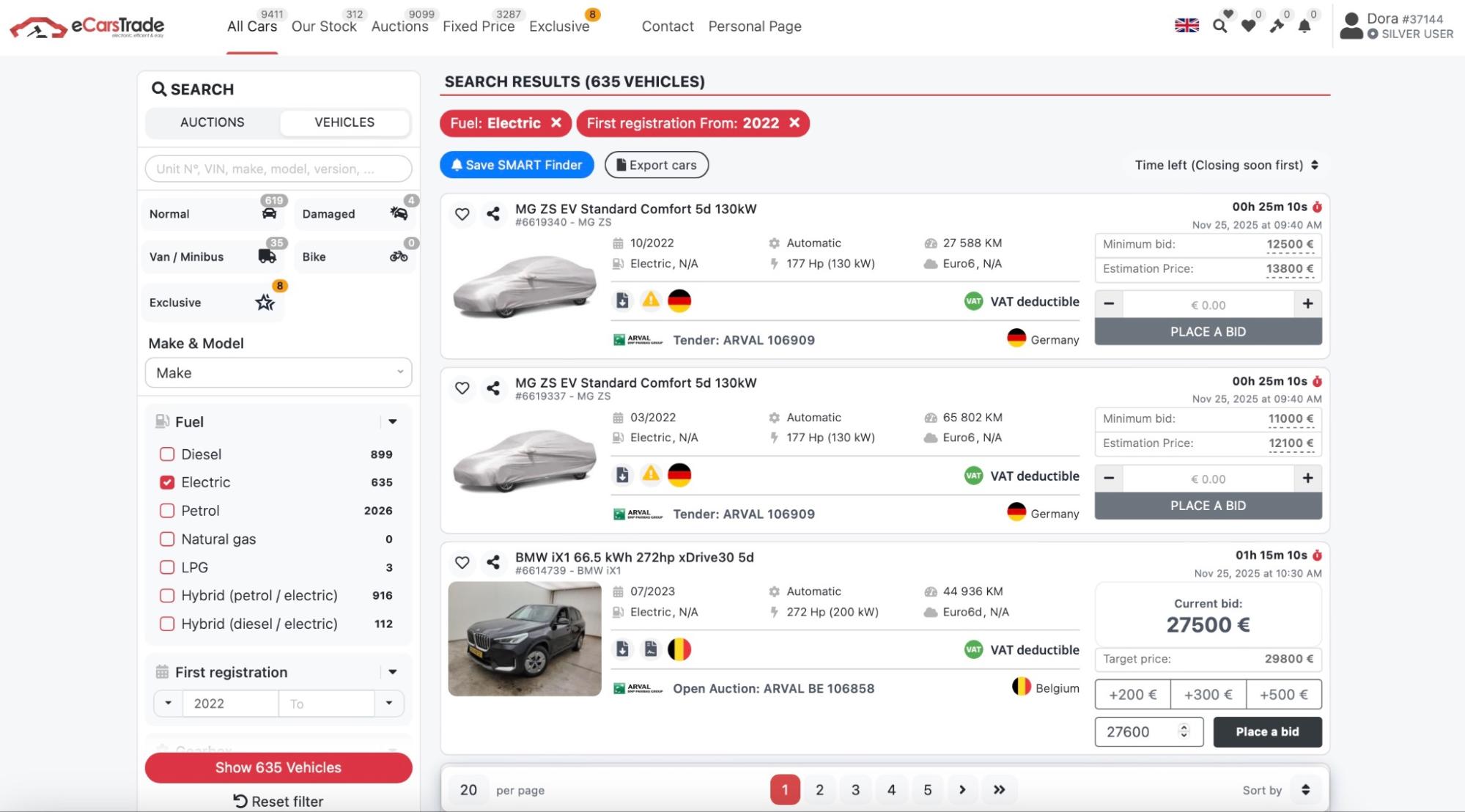
When you place a bid and win the car, we’ll issue the invoice, which is the first document you’ll need for import.
2. Book a ferry
Your next step is booking a ferry. You’ll need to choose your EU exit port in advance and inform your seller about it because this information is required when preparing the EX-A export declaration.
Most traders choose France as their point of exit because of its convenient ferry routes to Tunisia.
3. Prepare the documents
Before the transport starts, you’ll need to gather the necessary documents: the vehicle purchase invoice, original registration papers, and the valid passport copy of the importer.
4. Obtain transit plates
You’ll need to get the transit plates from the seller’s country so you can drive the car to the ferry.
So, once you obtain the plates, you’re ready to start your trip toward the exit port.
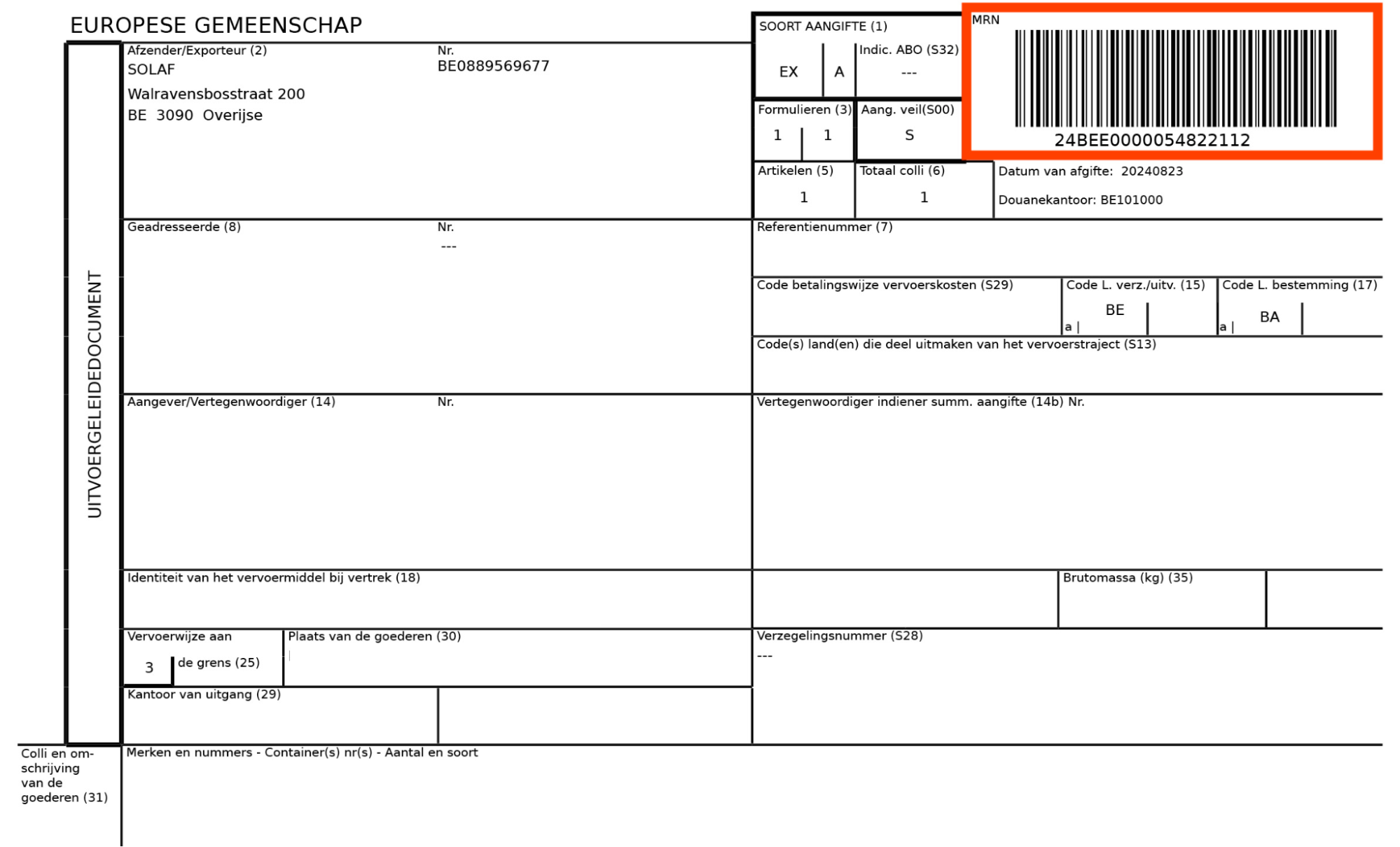
5. Request EX-A
Before the car leaves the EU, the seller will have to file the EX-A declaration.
At this step, you’ll have to make sure the seller has the right buyer details and the information about your exit port.
When the EX-A has been requested, you will receive the MRN number which you can use to track the export status of your vehicle.
6. VAT refund
Non-EU buyers purchasing cars from the EU are generally required to pay a VAT deposit.
This applies to Tunisian traders as well, so when you bought a car through eCarsTrade, you paid a VAT rate equal to the VAT in the seller’s country.
For example, if the car was sold from Germany, you paid 19%. If it came from Belgium, you paid 21%.
Once the car leaves the EU and customs closes the EX-A at the exit border, you receive a full VAT refund. The refund goes back to the same account you used for the purchase.
7. Clear customs and register the car
When the car arrives in Tunisia, you can start the customs clearance process.
At this stage, you’ll present your import documents, pay the applicable taxes (customs duty, consumption tax, and VAT if it applies), and complete the standard vehicle inspection. Once customs releases the car, you can move on to registration.
After you register the car, it’s officially ready for resale or use.
Get to know the Tunisian car market
The Tunisian car market is currently thriving, with car sales rising by over 20% in the first half of 2025.
According to Focus2move, the top performing brands include:
- Fiat
- Hyundai
- Citroen
- Kia
Note that Tunisia encourages EVs with financial incentives. Even so, EVs still make up a small share of total sales.
Among electric car brands, Hyundai is currently in the lead, followed by BYD and DongFeng.

Importing a car to Tunisia - FAQ
► How much tax will I pay when importing a car to Tunisia?
This depends on the car type and engine size. Petrol and diesel cars face high taxes because you’ll pay customs duty, consumption tax (which can be very high on large engines), and VAT.
Electric vehicles are treated differently and benefit from full exemptions on customs duty and VAT.
► Who files the EX-A export declaration?
The seller files the EX-A before the car leaves the EU. If you buy through eCarsTrade, we prepare the EX-A for you once you tell us the exit port.
► Can I drive the car to the ferry with the seller’s plates?
No. You’ll need transit plates issued in the seller’s country to legally drive the car to the exit port. Once you have the plates, you can start your trip to the ferry.
► How do I get my VAT refund?
You pay a VAT deposit equal to the VAT rate in the seller’s country when you buy the car.
After the car leaves the EU and customs clears the EX-A doucment, you receive a full refund to the same account you used for the purchase.
A importação de veículos da Europa pode ser complexa, mas a eCarsTrade está aqui para simplificar o processo. Saiba como: